
Comparison · 2 picks
Aira vs Octopus Heat Pump: 2026 UK Decision Guide
Affiliate disclosure: we may earn a commission when you buy through links on this page, at no extra cost to you. Our verdicts are our own and are not influenced by compensation.
Aira and Octopus represent the two genuinely different ways to put a heat pump into a UK home in 2026. Aira sells you a 15-year service subscription - install, hardware, maintenance, monitoring, and warranty all bundled into a fixed monthly fee. Octopus sells you a Daikin-built heat pump (the Cosy 6) outright at one of the lowest UK prices, with the £7,500 Boiler Upgrade Scheme grant applied as a visible deduction. The decision between them isn't really about hardware - it's about whether you'd rather buy certainty (Aira) or capital efficiency (Octopus).
This is an editorial decision guide. We have not personally installed either system. The arithmetic below uses each provider's published 2026 UK pricing and the BUS grant amount in force under Ofgem v5 (from 28 April 2026). Last reviewed: 11 May 2026.
At a glance
All 2 options side by side.
 |  | |
|---|---|---|
| Price | £4460 | £75 |
| Best for | Best for buyers focused on lifetime cost and who already are or could be Octopus Energy customers. | Best for capital-constrained or risk-averse buyers planning to stay 10+ years. |
| Review | Read review → | Read review → |
| Buy |
The picks in detail
Octopus Energy Octopus Cosy 6 (Outright + BUS)
Bottom line. Best for buyers focused on lifetime cost and who already are or could be Octopus Energy customers.
Pros
- All-in installed cost typically around £3,818 (July 2026) after the £7,500 Boiler Upgrade Scheme grant - among the most price-transparent UK heat pump packages
- R290 natural refrigerant (GWP of 3) - future-proof against the F-gas regulation tightening that will hit R32-based competitors
- Generous warranty: 8-year product cover plus 5-year labour, both backed by Octopus directly rather than a third-party installer
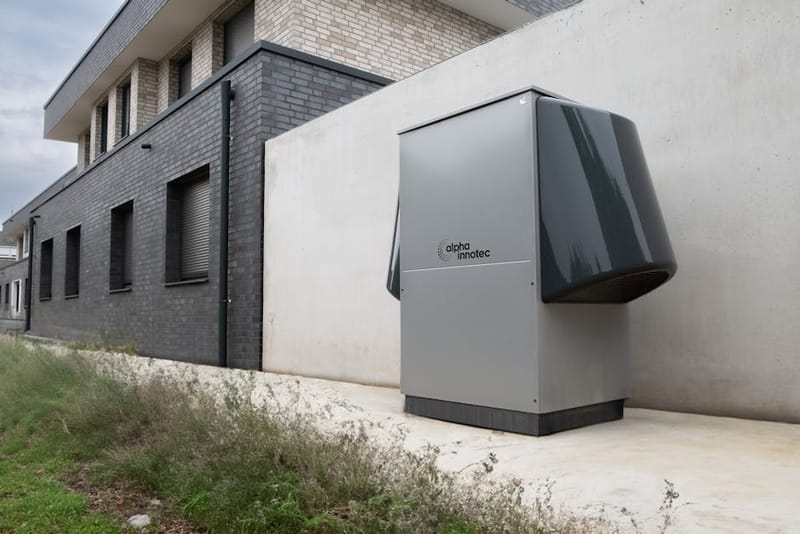
- Compact 855mm × 1125mm outdoor unit - fits awkward UK side returns where larger units would not pass clearance rules
- Single point of contact: survey, install, monitoring, repair, and tariff all handled by Octopus - no installer / manufacturer / energy-supplier coordination loop
Cons
- SCOP 3.4 at 50°C flow / 2.8 at 65°C flow - mid-range efficiency; older homes that can't run at low flow temperatures will see noticeably higher running costs than published headline figures imply
- Cosy 6 caps at properties with measured heat loss below 5.6kW. Many UK semis and detached homes (especially pre-1990s with limited insulation upgrades) need the Cosy 9 or Cosy 12 instead
- Hardware can only be bought through Octopus's install service - you cannot have an independent installer fit a Cosy 6 if you prefer your own tradesperson
- Annual service plan is an extra £9/month - adds £108/year on top of the headline price
- Cosy Pods are basic temperature/humidity sensors, not a full smart-thermostat replacement; integrators wanting Honeywell / tado° / Hive controls will need additional kit
Aira Heat Pump (Subscription)
Bottom line. Best for capital-constrained or risk-averse buyers planning to stay 10+ years.
Pros
- Zero up-front cost - the install is bundled into the monthly fee
- Maintenance, warranty, monitoring all included for 15 years
- Fixed monthly cost gives budget certainty
- One provider for hardware, software, install, and service
Cons
- 15-year contract lock-in is long
- Total lifetime cost materially exceeds outright + BUS for typical buyers
- Property suitability filter is tighter
- Contract-transfer terms on house sale need careful reading
How are Aira and Octopus actually different?
The structural choice, not the hardware spec
Most heat-pump comparisons start with the unit - kW rating, SCOP, refrigerant, noise level. Aira vs Octopus is unusual because the unit comparison is a sideshow. Both deliver air-source heat pumps that will heat a typical UK 3-bed home competently. The differentiator is what's wrapped around the unit.
- Ownership model
- Aira: 15-year subscription / Octopus: outright purchase
- Up-front cost
- Aira: £0 / Octopus: £500–£6,500 net after £7,500 BUS
- Monthly cost
- Aira: £50–£100 fixed / Octopus: electricity bill only (no fixed system fee)
- 15-year total cost
- Aira: £9,000–£18,000 / Octopus: ~£5,500–£9,500 (incl. maintenance)
- Hardware
- Aira's own ASHP + smart hub / Octopus Cosy 6 (Daikin-built to Octopus spec)
- Install
- Aira's own install team / Octopus Energy Services (MCS-certified)
- Maintenance
- Aira: included 15 yrs / Octopus: separate (annual service ~£150–£250)
- Warranty
- Aira: 15 years / Octopus: typically 5–7 years on unit
- BUS grant
- Aira: folded into monthly pricing / Octopus: visible £7,500 line on invoice
- Tariff lock-in
- Aira: none (any supplier) / Octopus: works best with Octopus tariffs
- Resale of property
- Aira: contract novates to buyer / Octopus: owned asset transfers cleanly
What does each cost over 15 years?
What you actually pay across the heat pump's expected design life
The lifetime-cost difference is the single most important number in this decision. Both heat pumps have roughly 15-year design lives, so a 15-year horizon is the right comparison frame. The figures below use each provider's 2026 UK pricing midpoints.
- Aira at £75/month × 180 months
- £13,500 over 15 years (midpoint)
- Aira at £50/month low-end × 180 months
- £9,000 over 15 years
- Aira at £100/month high-end × 180 months
- £18,000 over 15 years
- Octopus Cosy 6 install (typical)
- ~£10,500–£12,000 before BUS
- Octopus Cosy 6 - after £7,500 BUS
- ~£3,000–£4,500 net up-front
- Octopus annual servicing × 15 years
- ~£2,250–£3,750 lifetime
- Octopus 15-year total (typical case)
- ~£5,500–£9,500
- Aira premium vs Octopus (midpoint vs midpoint)
- ~£6,000–£8,000 over 15 years
Whose heat pump hardware is better, Octopus or Aira?
Both are competent ASHPs - the engineering isn't where this is decided
The Octopus Cosy 6 is a 6 kW air-source heat pump designed by Octopus and built to that spec by Daikin (one of the world's largest heat-pump manufacturers). It's optimised for typical UK 3-bed properties at the lower-cost end of the install market. The fixed 6 kW rating means it suits properties where 6 kW is the right size - well-insulated 3-bed semis, smaller detached homes. Properties needing 10 kW+ aren't a fit; that's a real constraint, not just a marketing footnote.
Aira's heat-pump hardware is built by Aira itself in a range of capacities, paired with Aira's own smart-controls hub. The unit's published specs are competitive with mainstream ASHPs (Vaillant, Mitsubishi, Daikin, etc.). The hardware story isn't compelling on its own - what Aira sells is the bundle, not the unit.
Practical implication: if your property's heat-loss calculation comes back at materially more or less than 6 kW, Octopus Cosy 6 may not be a fit and the decision narrows to Aira (or a different outright-purchase route). If you're comfortably in 6 kW territory, both are technically viable.
Which should you pick for your situation?
What kind of buyer are you?
- Up-front capital is the binding constraint
- → Aira
- Lifetime cost is the optimisation target
- → Octopus
- Risk-averse - want all maintenance included
- → Aira
- Already an Octopus Energy electricity customer
- → Octopus (tariff integration is the real value)
- Plan to sell the house within 5–7 years
- → Octopus (clean asset transfer)
- Plan to stay in the property 15+ years
- → Either; Aira economics improve the longer you stay
- Property heat-loss is materially above 6 kW
- → Aira (or alternative installer); Cosy 6 is fixed-size
- Want flexibility on electricity supplier
- → Octopus (works with any tariff, best with Octopus's own)
- Off-gas-grid oil/LPG household (£9k BUS uplift)
- → Octopus (the £9k BUS uplift makes net cost ~£0; Aira can't match this)
When is each one the wrong answer?
Honest about when to choose neither
Aira is wrong when lifetime cost matters most
The ~£6,000–£8,000 premium over 15 years is real money. If pure pound-cost is your target, Aira loses on the comparison every time.
Octopus is wrong when 6 kW doesn't fit
The Cosy 6 is a single-spec unit. Properties needing 4 kW or 10 kW+ should look at the broader installer market or at Aira.
Both are wrong for heritage / listed buildings
Complex retrofits, listed-building consent, awkward outdoor-unit placement - both Aira and Octopus filter for standard property profiles. Specialist MCS-certified installers handle these better.
Both are wrong if you'd rather wait for grant changes
If the £9k oil/LPG uplift applies to you and the formal notice hasn't landed yet, waiting until it does is sometimes the cheapest decision - especially with Octopus.
Frequently asked questions
Which is cheaper over 15 years - Aira or Octopus?
Are Aira and Octopus both eligible for the BUS grant?
Can I switch electricity supplier with each option?
What happens to each option if I sell the house?
Does the Octopus Cosy 6 fit every property?
How does Aira's monthly fee compare to financing the Octopus outright cost?
Which is the safer choice if I'm risk-averse about heat-pump performance?
Are there other heat-pump options I should compare?
Aira Heat Pump Review 2026
Octopus Cosy 6 Review

Heat Pump Cost UK 2026
Boiler Upgrade Scheme 2026
Sources: Aira UK published pricing pages (current at 11 May 2026); Octopus Energy Services Cosy 6 published pricing and product specifications; Ofgem Boiler Upgrade Scheme Property Owner Guidance v5 (in force from 28 April 2026); DESNZ £9,000 oil/LPG uplift briefing (21 April 2026); Energy Saving Trust heat-pump cost and running-cost guidance. This is editorial research-based comparison, not regulated commercial or installation advice. Heat Pump HQ has not personally installed either system. Pricing, contract terms, and product specifications change - always confirm directly with both providers via a written quote before committing.